
How to join land drain pipe
10 September 2026 · The Shape Shop
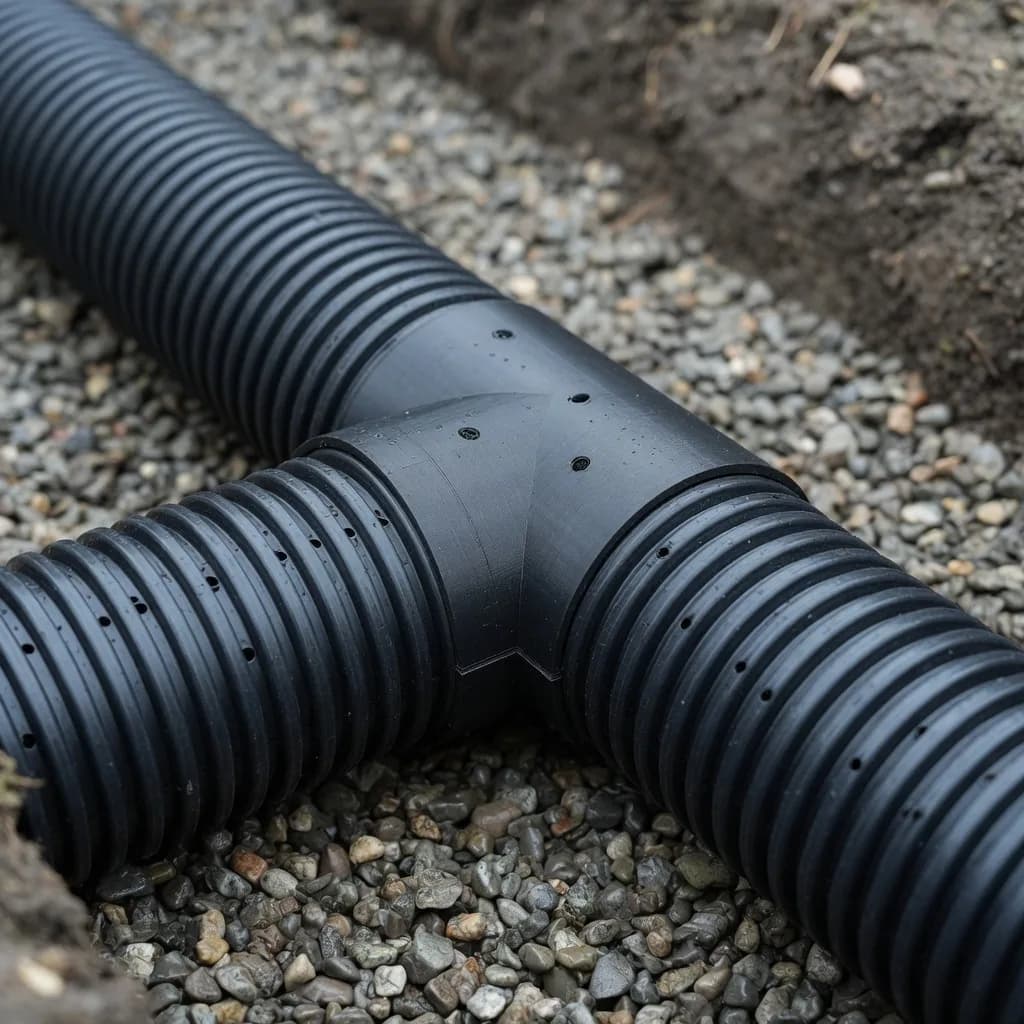
Join land drain with a push-fit coupling or junction on the corrugations. Pick the fitting for a straight run, branch, corner or size change — not a watertight UG joint.
Join two lengths of land drain with a straight coupling pushed onto the corrugations. Branch with a Y or a T, turn with an elbow, cross with an X or 4-way, and step size with a reducer. The joint is a mechanical grip on the ribs of the pipe — not a ring-seal underground drainage socket, and not for foul water.
We sell the fittings, made in the UK. The coil of perforated pipe comes from a builders’ merchant. Match the fitting to the pipe in millimetres, then push it home. Pipe sizes differ by brand — check fit before ordering. OD fittings are coming soon for wider compatibility (no date or SKUs yet).
Which fitting for which job

Pick the shape for the layout, then the size for the pipe.
- Coupling — join two lengths in a straight line. Coil runs out, a damaged piece is cut out, or any in-line join. Land drain couplings, 50–100mm.
- Y — herringbone laterals at about 45°. The side run should enter in the direction of flow down the main. Y junctions, 50–100mm.
- T — a right-angle side branch when the run has to come in at 90°. T junctions, 60 and 80mm. Role compare with X and 4-way: T vs X vs 4-way.
- X / 4-way — crossing runs, or four pipes meeting. Keep the fall; silt drops more readily at a cross. X and 4-way, 60 and 80mm.
- Elbow — turn a corner around a bed, path or building. Keep the fall through the bend. Elbows, 60, 80 and 100mm. More: land drain elbows — turning corners.
- Reducer — mix leftover coil. Steps 80–60mm, 100–80mm or 100–60mm. Do not force one size into another. Reducers.
Not every shape is in every size. Couplings and Y junctions cover 50, 60, 80 and 100mm. Elbows cover 60, 80 and 100mm. T, X and 4-way are 60 and 80mm only. There is no 50mm reducer. If the coil is 100mm and you need a T, step with a reducer onto an 80mm junction, or keep the 100mm run straight. Land drain pipe sizes covers the millimetre labels.
How to push-fit onto the corrugations
The socket is sized to the outside of the corrugations. Internal ribs catch the pipe’s peaks. You are not seating a rubber ring, and you are not solvent-welding.
Cut the pipe square with a fine-tooth saw or pipe shears. Cut in a groove in the pipe — the dip between two peaks — so the end is a full rib the fitting can grab. An angled cut or a cut through the middle of a peak leaves a thin wall that folds over and jams.
Shake out the cuttings. If the end is oval from the coil or from being stood on, work it round with your hands before you offer up the fitting.
Offer the fitting square to the pipe. Push straight, with the pipe braced so you are not bending the run. Several ribs need to sit inside the socket — a rim-only bite will pull off when you backfill. Repeat on the other outlet.
Give the joint a firm pull. It should not slide off by hand. If it spins freely with no grab, the fitting is too big. If you need a hammer, stop: it is too small, the pipe is oval, or you are pushing at an angle. A little soapy water on the ribs can ease a tight but correct fit in cold weather. Do not heat the fitting with a flame.
Bed every fitting on stone, same as the pipe, and keep soil out of open ends. The rest of the install is in how to install a garden land drain.
Why these are not watertight underground drainage joints
Land drain is a perforated collector. Water is meant to enter through the slots along the pipe. The joint only has to stay connected. It does not have to hold pressure, and it does not have to be watertight.
Underground drainage is a different system. 110mm UG pipe is smooth, joined with a ring-seal socket. Those couplings will not grip land-drain corrugations. Land-drain fittings will not make a sealed UG joint.
Do not put foul water through land drain. The one sensible meeting point is the outfall. If a land drain discharges into a 110mm surface-water drain, that is an adapter, not a coupling between two coils.
Common mistakes
- Forcing the wrong size. Read the print on the coil, or measure across the outside of the corrugations. An 80mm coupling on 60mm pipe will pull off.
- Tape instead of a coupling. Tape does not take pull from backfill and does not last in wet ground.
- A UG socket on land drain. If it has a rubber ring and says 110mm, it is not for this pipe.
- A Y twisted into a corner. Trench turns 90° — elbow. Branch at 90° — T. Laterals at 45° — Y.
- Reducing towards the outfall. A main should not get smaller as it runs downhill. Use leftover smaller coil on laterals, and step up onto the collector.
- An unsupported joint. If the stone bed drops away under a coupling, backfill will lever the joint.
Leftover coil and mixed sizes
Keep one size as the main — usually 80mm or 100mm on a lawn collector — and run leftover 60mm as laterals. Fit a reducer, then the smaller pipe. Do not telescope one pipe inside the other and wrap it.
If you only have 50mm coil, couplings and Y junctions exist in 50mm. T, X, 4-way, elbow and reducer do not in this range. Run 50mm as its own small lateral system, or buy 60mm or 80mm coil for the rest of the job.
After the join
Once every joint pulls true, set the fall and close the trench as a land drain. Stone around the pipe, soil on top, unused ends capped. Junctions and elbows are where silt settles; an in-line silt trap on the main is worth it on anything longer than a short patio run.
We make the fittings. We do not sell pipe coils — buy those to the millimetre size of the fittings, check fit, then push onto the corrugations.
Frequently asked questions
- Can I join land drain with a 110mm underground drainage coupling?
- No. A UG ring-seal socket is for smooth 110mm pipe, not corrugated land drain. Use a land drain coupling or junction that matches the pipe. If the land drain must discharge into a 110mm surface-water run, that is a separate adapter.
- Do I need tape, glue or a rubber seal on the joint?
- No. The fitting is a push-fit onto the corrugations. These joints are not meant to be watertight.
- Why will the fitting not push on?
- Almost always the size is wrong, the cut is oval, or you are offering it up at an angle. Match 60mm, 80mm or 100mm to the coil, cut square in a groove, round the end with your hands, then push straight. Pipe sizes differ by brand — check fit before ordering.
- Should I use a Y or a T for a side branch?
- Use a Y for herringbone laterals, at about 45 degrees, feeding in the direction of flow. Use a T when a branch has to come in at a right angle. Do not fight a Y into a 90-degree corner; that is an elbow or a T.
- Can I join leftover 60mm coil to an 80mm or 100mm run?
- Yes, with a reducer, not by forcing one size into the other. Keep the larger pipe as the main towards the outfall.
- Are these joints for foul water?
- No. Land drain is a perforated groundwater collector in a gravel trench. It is not a sealed foul or soil stack.
Fittings for this job
Pipe, gravel and membrane come from a merchant. These are the Shape Shop parts that match this article.
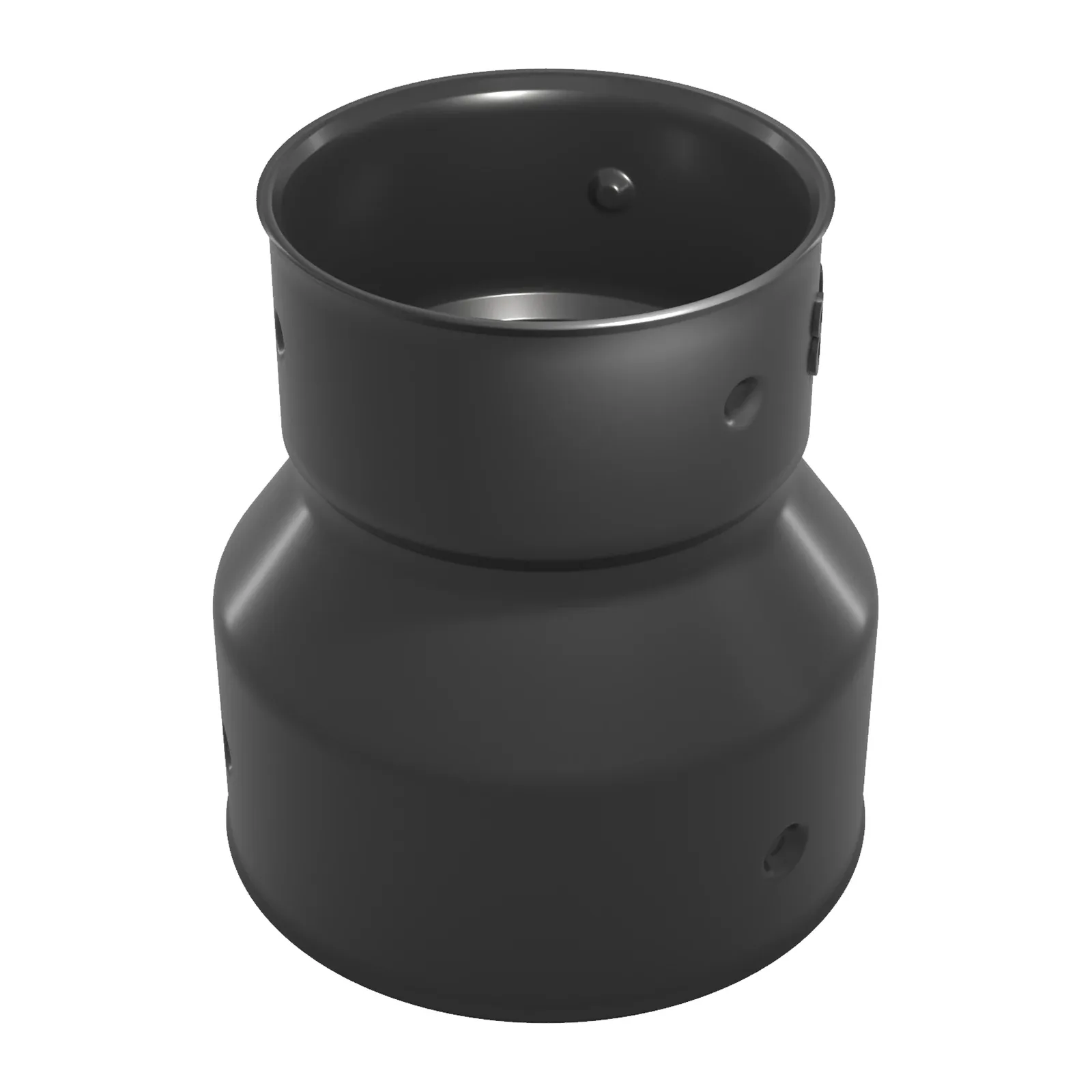
Reducer 80 to 60, 100 to 60, 100 to 80mm for Land Drain Pipe, UK Made
- 60 · 80 · 100mm
From £9.95
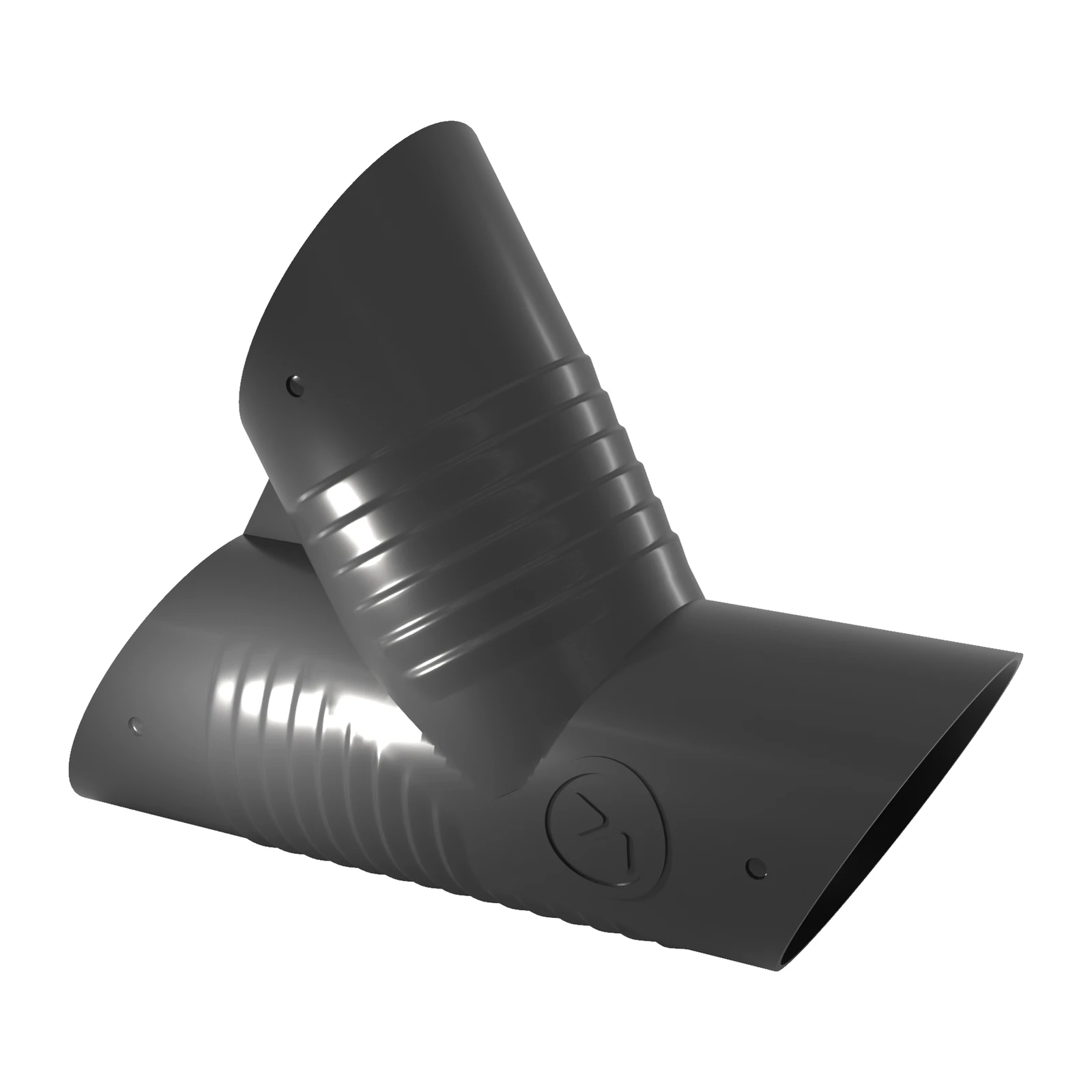
Y Junction 60, 80 and 100mm for Land Drain Pipe, UK Made
- 60 · 80 · 100mm
From £7.95
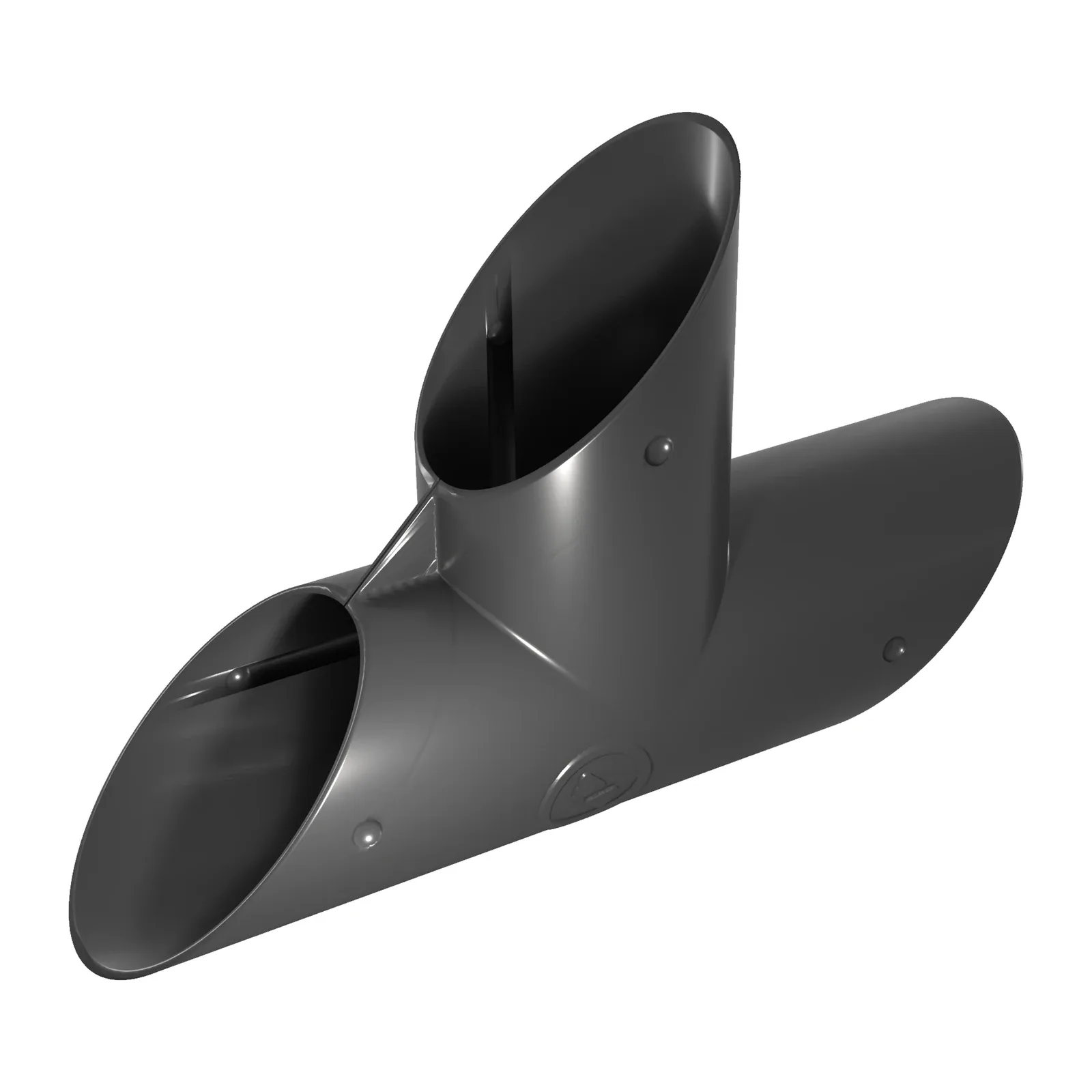
T Junction 60, 80 and 100mm for Land Drain Pipe, UK Made
- 60 · 80 · 100mm
From £9.95
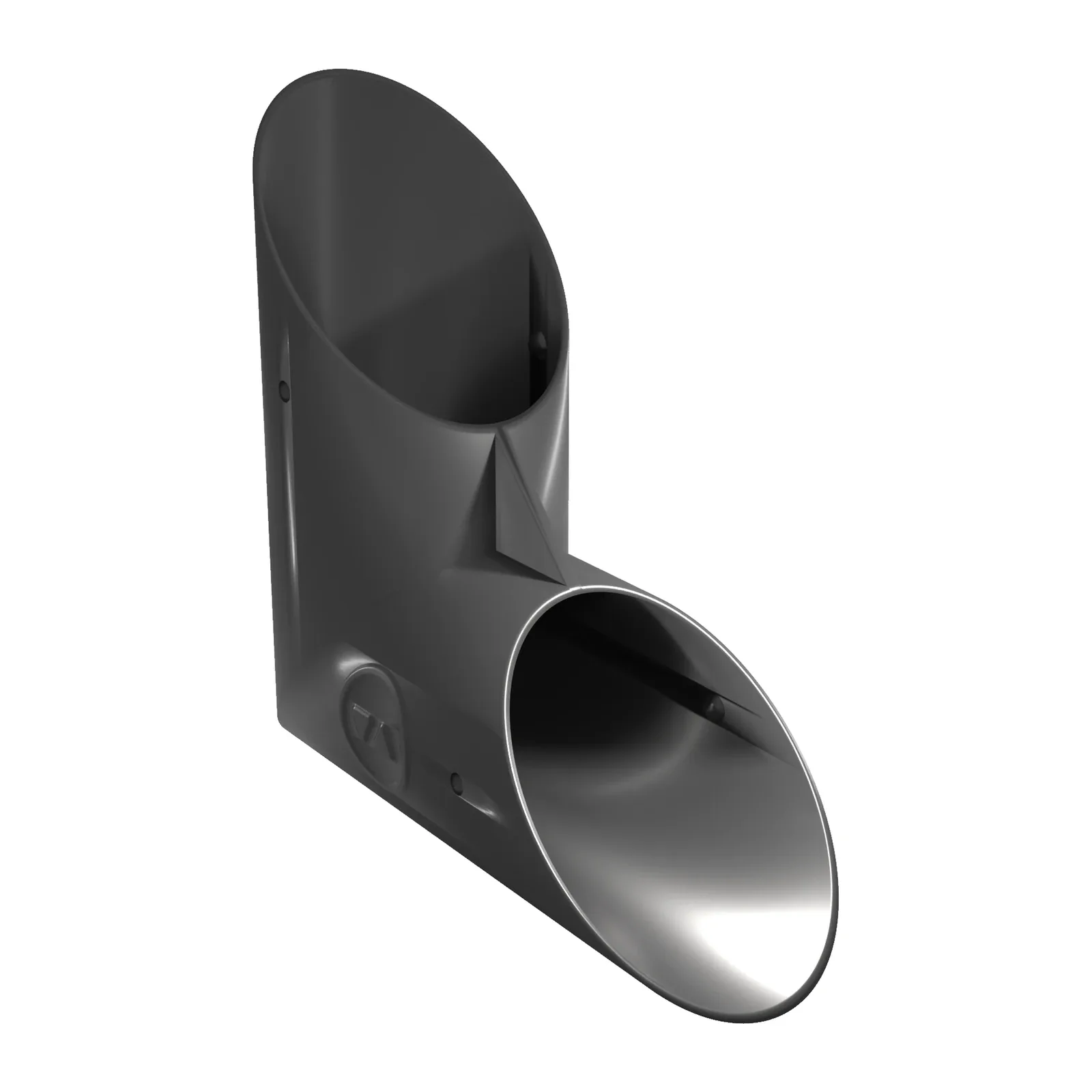
Elbow 60, 80 and 100mm for Land Drain Pipe, UK Made
- 60 · 80 · 100mm
From £7.95
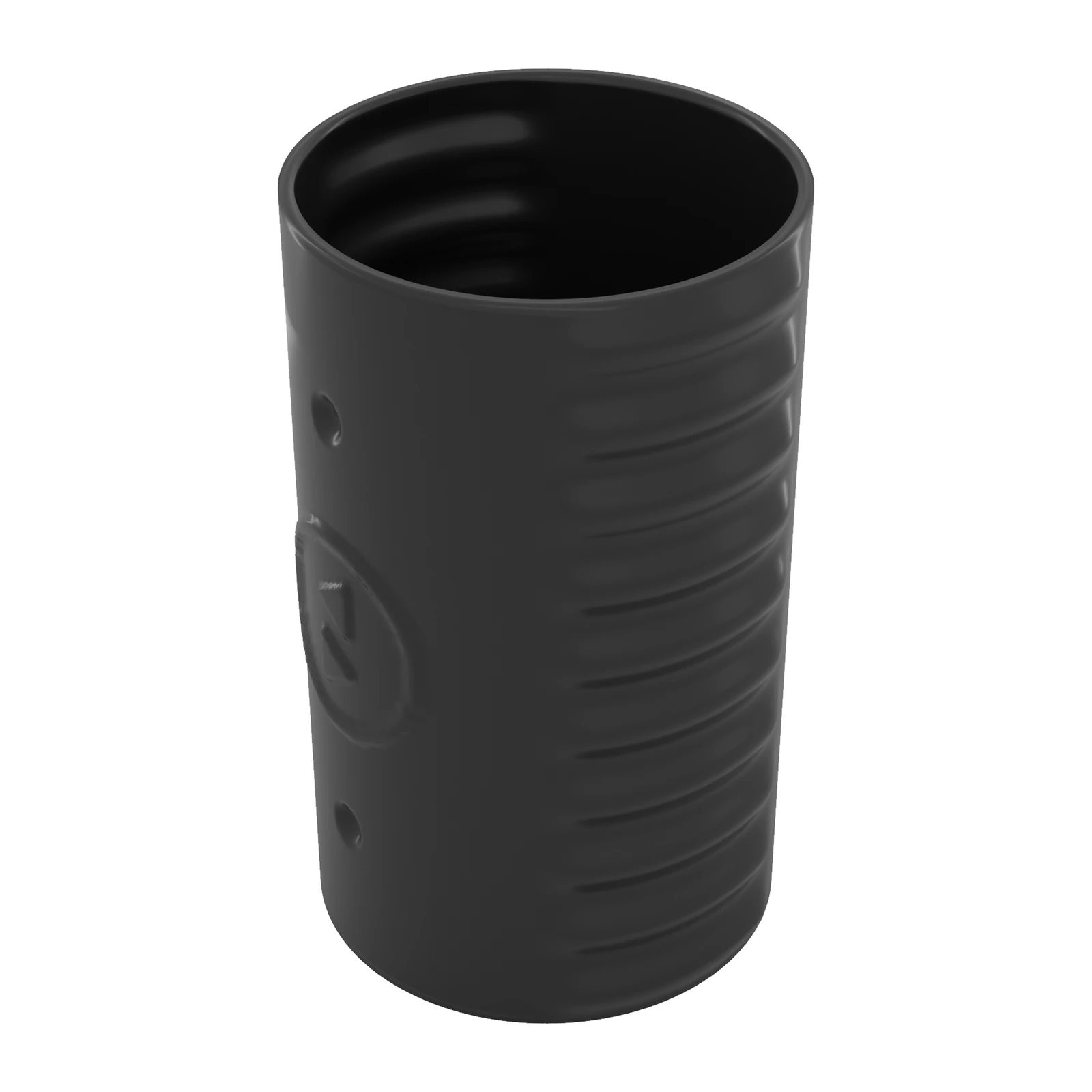
Coupling 60, 80 and 100mm for Land Drain Pipe, UK Made
- 50 · 60 · 80 · 100mm
From £5.95