What is a land drain silt trap?
10 September 2026 · The Shape Shop
A land drain silt trap catches grit in a hopper so it does not pack the pipe and soakaway. Where to fit one on 60, 80 or 100mm land drain, and how to empty it.
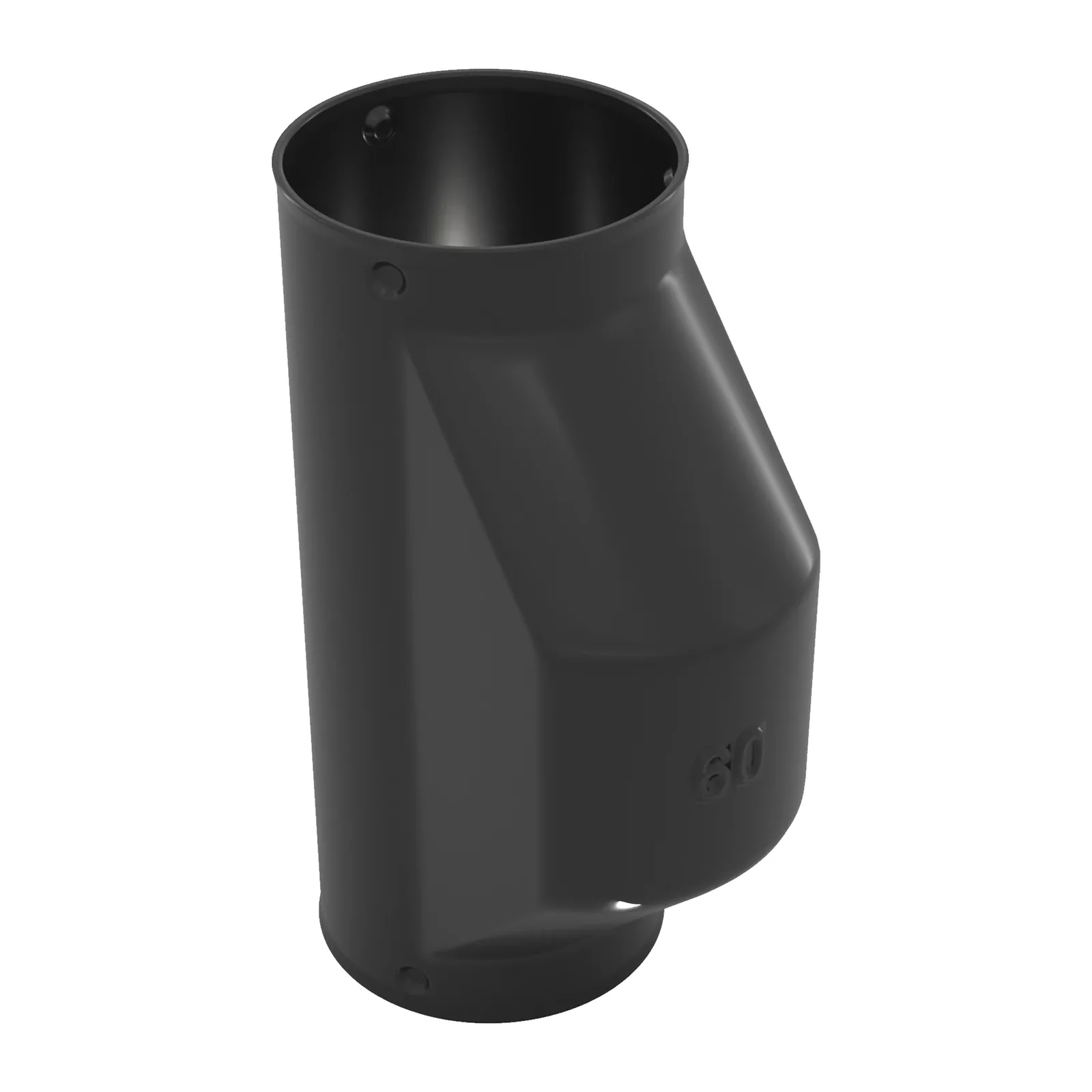
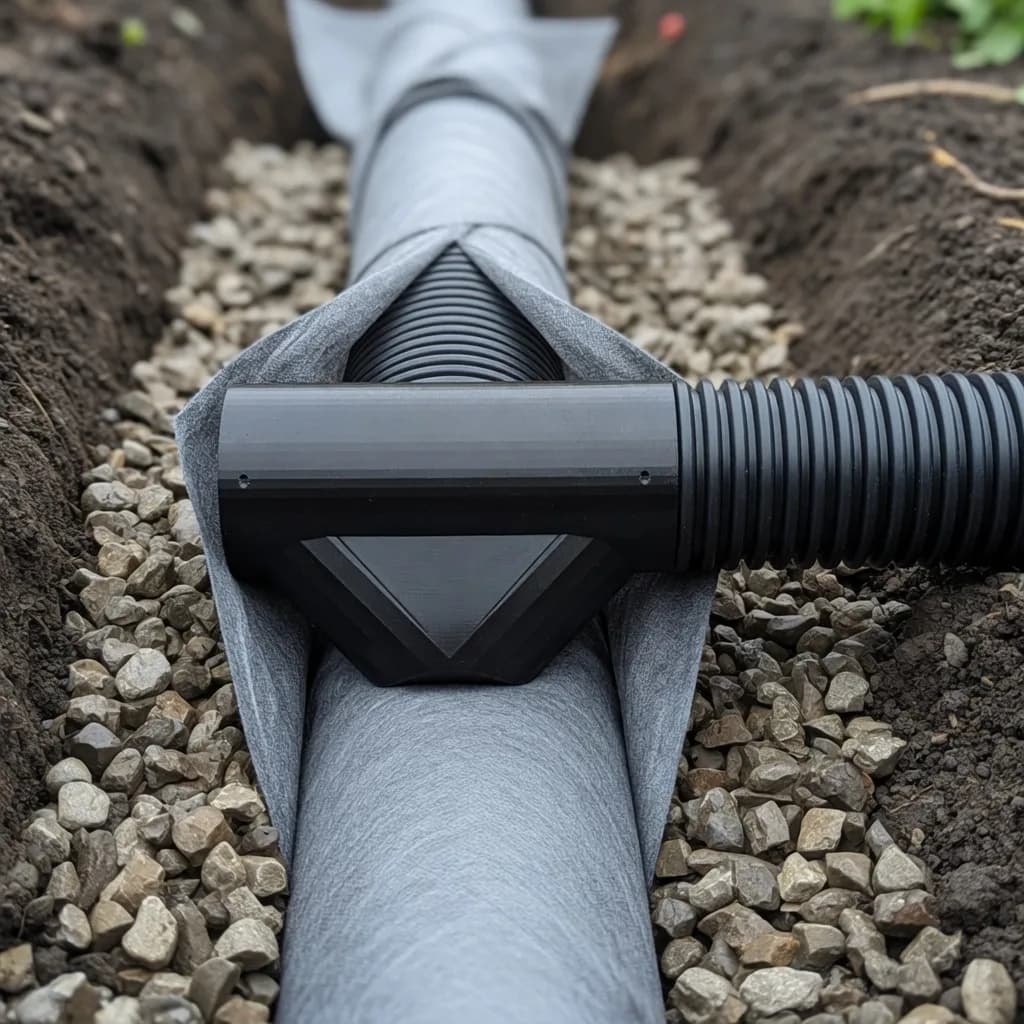
A land drain silt trap is an in-line fitting with a hopper underneath the pipe. Water keeps flowing along the land drain (the same run people call a French drain). Heavier grit and sand drop into the hopper instead of packing the pipe, the gravel, and the soakaway at the end.
That is the whole job: catch silt where you can still dig to it. French drains usually fail from fines — soil, patio jointing sand, grit from a downpipe — not from the idea of a land drain itself.
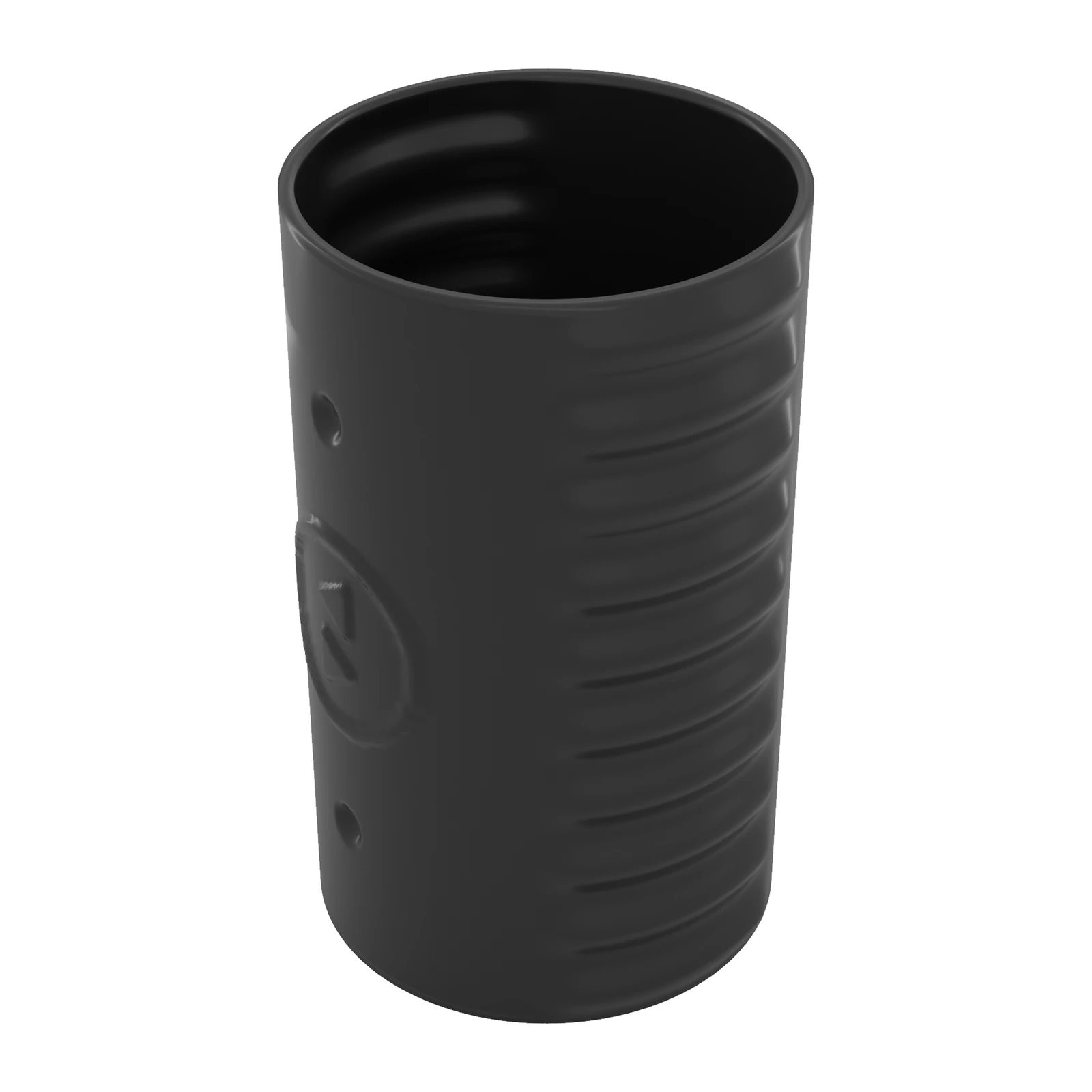
The Shape Shop silt trap is a straight silt-trap connector for 60mm, 80mm or 100mm corrugated land drain. It fits in-line on the perforated pipe. It is a fitting in the trench, not a street gully with a lid in the lawn. We sell the fittings. Pipe, gravel and membrane come from a merchant.
What a land drain silt trap is not
It is not a road gully with a lid in the lawn, and it is not a foul-water or soil-pipe fitting. It is a short straight sleeve the corrugated pipe pushes into at each end, with a hopper hanging below the bore. You bury it in the trench with the pipe. To empty it, you dig down to it.
Why land drains silt up

A land drain — the same thing people mean by a French drain — is a perforated corrugated pipe in a gravel trench. Water seeps through the stone, enters the slots, and runs downhill to an outfall or a soakaway. Anything small enough to ride with that water can come too.
Soil fines are the usual culprit. Clay and silt wash off the trench walls, especially if the trench sat open in the rain. Patio jointing sand is the other classic — kiln-dried sand leaves the joints in the first winters, finds the patio interceptor, and heads into the perforated pipe.
Skip the geotextile and you speed all of this up. Open pipe ends without end caps do the same from the other direction: soil walks into the bore.
A silt trap is not a licence to skip the wrap or the caps. Even a tidy install still sees grit; the trap is where you choose that grit to collect. How to install a garden land drain covers the fall, the stone and the wrap. If the water is coming off new paving: garden drainage when landscaping patios.
Where to put a silt trap
Put the trap where grit is about to become a problem you cannot reach.
Before a soakaway. This is the placement that earns the fitting. A soakaway only works while water can still get into the ground; fill the voids with sand and it is a buried tank that does not empty. Dig a pocket in the trench bed for the hopper so the pipe stays on grade.
At the low point of a long run. Silt drops where water slows. If you only fit one trap, put it there.
After a patio interceptor. Channel drains and patio edge outlets wash jointing sand into whatever they connect to. Put the trap just downstream, in ground you can still dig — a border or a strip of lawn, not under flags.
Do not hide it under a patio if you have a choice. Hopper down, always — the sleeve is a straight connector, not a bend. Keep the fall through the fitting. If you need to turn, use an elbow or a junction on either side.
How the in-line hopper works
There is no filter mesh and no moving part. The fitting is a short, straight sleeve the corrugated pipe pushes into at each end, with a hopper hanging below the bore.
Water carries grit. In the trap, heavier particles — sand, grit, crumbs of soil — fall into the pocket underneath. Cleaner water continues along the sleeve into the next length of pipe.
It is the same idea as a catch pit, scaled to a garden land drain. Fine clay in suspension can pass. What it is good at is the stuff that wrecks a soakaway: jointing sand and grit.
Because it is a straight connector, it also joins two lengths. You do not need a separate coupling at that joint. Elsewhere on the run, how to join land drain pipe is the method.
Scoop a hollow in the bed so the hopper sits down into the stone rather than riding up and kinking the line. Wrap as you would the rest of the trench, but do not pack membrane into the hopper mouth.
Emptying a buried trap
This is not a road gully. There is no cast lid in the lawn. The trap lives in the trench with the pipe. To empty it, you dig down to it.
Mark the spot before you backfill: a spare paving slab, a short marker peg, a measurement from a fence post. Put the trap where you can dig later. After a new patio, check at the end of the first winter — that is when jointing sand moves.
When you dig, lift the pipe out of one end of the sleeve, scoop or flush the hopper, and push the pipe back in. If you need to empty from the surface, that is a different product: a catch pit or inspection chamber from a merchant, with a lid at grade.
Geotextile still matters
A silt trap is extra, not a substitute. Wrap the trench so soil from the sides cannot migrate into the stone. Then the trap only has to deal with what still arrives: patio sand, grit from a surface connection, fines at joins and open ends.
Skip the wrap and the trap will fill fast, the gravel will still clog, and you will be digging the whole French drain, not just a hopper. Cap the ends. Keep the fall. Put dirty inlets through a trap.
We do not sell pipe, gravel or membrane. We make the plastic parts that join and protect the run.
Match 60, 80 or 100mm
The silt trap is made in 60mm, 80mm and 100mm. Match the pipe you have. Do not step up or down at the trap — a mismatch leaks fines and can pull the pipe out of the sleeve.
Pipe sizes differ by brand. Measure the pipe and check fit before ordering. OD fittings are coming soon for wider compatibility — no date or SKUs yet.
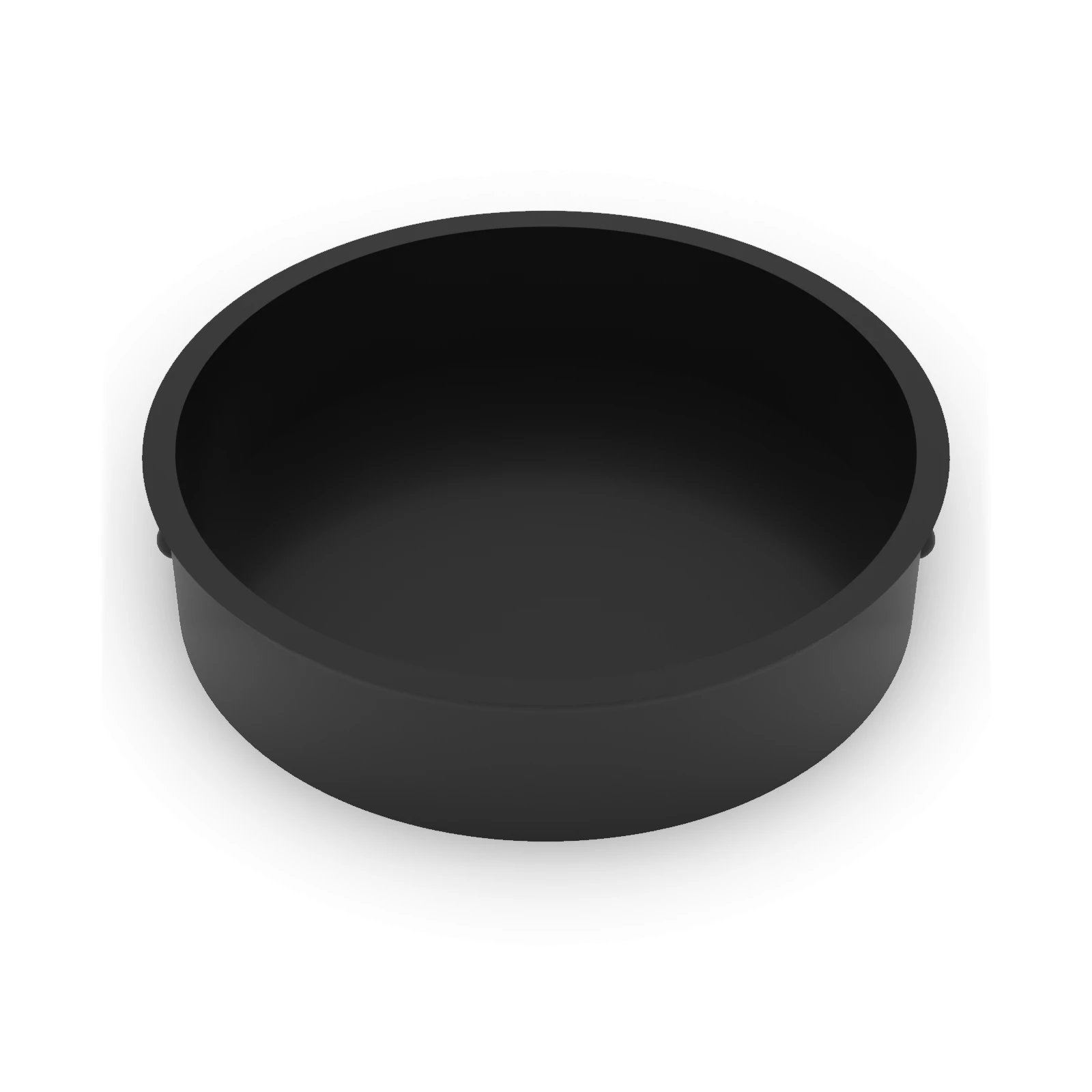
Straight couplings follow the same sizes (and include 50mm, which this trap does not). End caps close the upstream end so the bore is not an open mouth for soil.
This trap is for land drain — surface water and groundwater — not foul water, not a 110mm soil-pipe gully, and not a substitute for a building-drainage catch pit.
A French drain that stays open is mostly one that was wrapped, laid on fall, and not asked to swallow a patio’s worth of sand with nowhere for that sand to sit. The hopper is the somewhere. Fit it on purpose, mark it, and empty it when you can still find it.
Ready to fit one? Choose the land drain silt trap in 60mm, 80mm or 100mm — check fit before ordering; pipe sizes differ by brand.
Frequently asked questions
- What is a silt trap?
- On a garden land drain (French drain), a silt trap is an in-line fitting with a hopper under the pipe. Water keeps flowing; grit and sand drop into the hopper so they do not pack the pipe and soakaway. It is not a road gully with a surface lid.
- Do I still need geotextile if I fit a silt trap?
- Yes. A silt trap catches grit that is already in the flow. Geotextile is what stops most of the soil from entering the gravel and the perforated pipe in the first place. Use both.
- Where should I put a silt trap on a land drain?
- Put it where grit is about to become a problem — just before a soakaway, at the low point of a long run, or immediately after a patio interceptor or other surface connection. Hopper down, pipe on fall.
- Can I empty it from the surface like a road gully?
- No. This is an in-line fitting buried in the trench, not a chamber with a lid. Mark the spot and leave a place you can dig to. Do not put it under a finished patio if you can avoid it.
- Is this silt trap for foul water?
- No. It is for garden land drain — the perforated corrugated pipe in a French drain. It is not a soil-pipe fitting and it is not for foul drainage.
- Which size do I need?
- Match the trap to the land drain pipe: 60mm, 80mm or 100mm. Pipe sizes differ by brand — check fit before ordering. See the land drain silt trap. We do not sell the pipe.
- Will a silt trap stop my soakaway silting up on its own?
- It will catch a lot of the grit that would otherwise settle in the soakaway, but it is not a substitute for wrapping the trench, capping open ends, and keeping patio sand out of the run. Empty the hopper before it is full.
Fittings for this job
Pipe, gravel and membrane come from a merchant. These are the Shape Shop parts that match this article.