Drainage when landscaping a garden with a large patio
10 September 2026 · The Shape Shop
A large patio sheds rain onto leftover lawn and borders like a roof on the ground. Plan paving falls, an interceptor drain and a silt trap before the slabs go down — you often need more drainage after landscaping, not less.
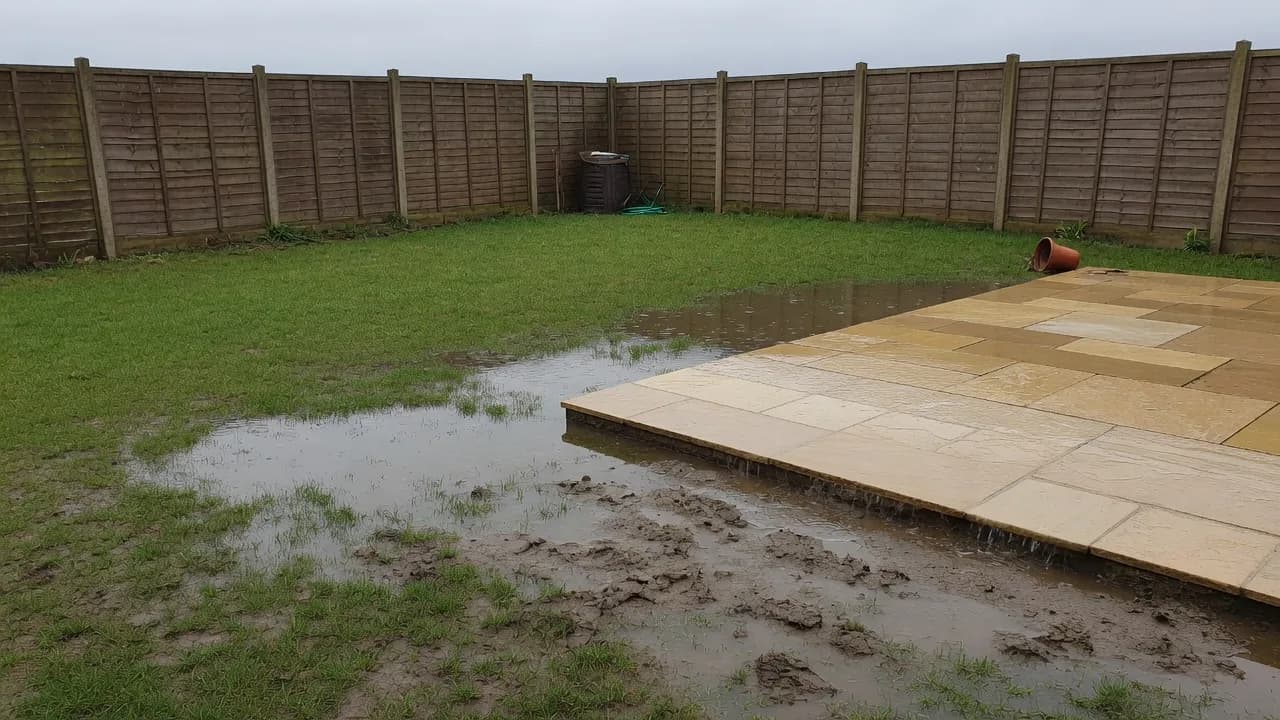
A large patio sheds rain like a roof on the ground. Water that used to soak across the whole garden now runs to the lowest paving edge and lands on the leftover lawn and borders. After a landscaping job you often need more drainage, not less.
If you are about to lay a large patio — or the lawn already sits wet for days after one went in — plan the water as part of the design. Falls should send rain to a chosen edge. An interceptor land drain along that edge should catch it. A silt trap should sit before any soakaway, because patio grit and jointing sand will clog a drain. If a downpipe or 110mm surface-water run needs to join corrugated land drain, use a proper adapter. This is surface water and groundwater only — never foul.
Hard paving concentrates rain


A lawn soaks. A patio does not. Porcelain, sandstone, concrete flags and resin-bound surfaces shed almost everything that lands on them. The sub-base under modern paving is compacted hardcore, so even the joints do not behave like soil.
The rainfall has not changed. The soak area has. Cover a third of a rear garden with paving and that water has to go somewhere: the strip of grass left, the border against the fence, or the lowest corner. A garden that never really ponded can pond every time it rains once the patio is down.
The problem is worse on clay, on a plot that already sat wet in winter, and on raised patios a step above the lawn. Water sheets off the edge. Permeable paving can reduce this, but many jobs are ordinary impermeable slabs. If that is what you are buying, plan for runoff.
Falls towards a planned edge, not the house
Paving needs a fall away from doors, damp-proof courses and the house wall, towards a low edge you have chosen on purpose. That low edge is the drainage plan.
If the slabs tilt towards the remaining lawn with nothing there to catch the water, you have aimed a roof valley at the grass. If they tilt towards a neighbour, you have moved the problem. Ask the landscaper, before anyone sets a line, where the low edge will be and what happens to the water when it arrives.
A linear channel in the paving is one answer. A land drain in a gravel trench just beyond the paving, where slabs meet lawn, is another — and you can still add that strip if the patio is already down, provided you can dig it.
An interceptor drain along the patio edge
The useful drain sits where the water arrives. For a large patio that is usually a trench along the low edge, filled with clean gravel, with perforated land drain in the bottom. Rain sheets off the paving, drops into the gravel, and is carried away instead of soaking the first metres of lawn.
Keep the trench tight to the paving. Wrap the pipe in geotextile so soil does not pack the holes. Sit it on gravel, not in raw clay. The run needs a fall of its own towards a soakaway, a crate, or an agreed surface-water outlet — not a dead end under the patio, and never the foul drain.
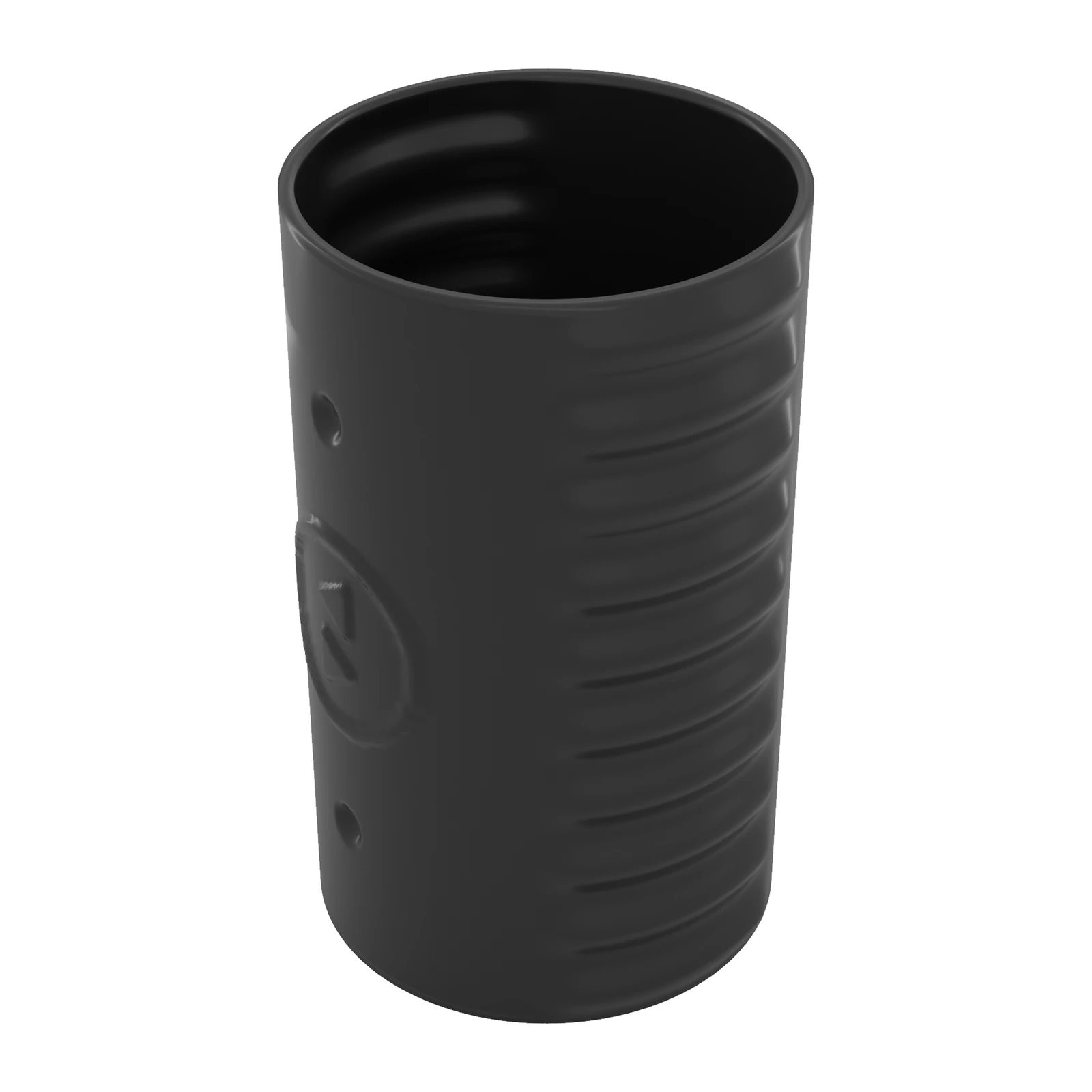
Join lengths with straight couplings in the same diameter as the pipe. Where a side run comes in, a Y junction is cleaner than forcing two pipes into one hole.
Pipe sizes differ by brand. Measure your coil or check the product size notes and check fit before ordering. Shape Shop will release outside-diameter (OD) fittings soon for wider compatibility — no launch date or SKUs yet. Larger patios and roof water usually want 80mm or 100mm on the main interceptor; 60mm suits a short border spur. More on diameter: land drain sizes 60, 80 and 100mm. How much extra pipe the remaining lawn needs is in how much land drain for a lawn.
Cap buried upstream dead ends with a solid end cap or grid end cap. If the outfall end is exposed and water must leave the pipe into a ditch, stream or another drain, that is an anti-return end cap job — not a buried blank, and not a check valve.
Connecting a downpipe or 110mm surface-water run
Moving a roof downpipe, adding a canopy pipe, or picking up a patio gully are rainwater jobs. They are not the soil stack and must not be tied into foul drainage.
UK gutter downpipes are commonly 68mm. Underground surface-water pipe is commonly 110mm. Land drain is corrugated, in 50–100mm. Those families do not push-fit together.
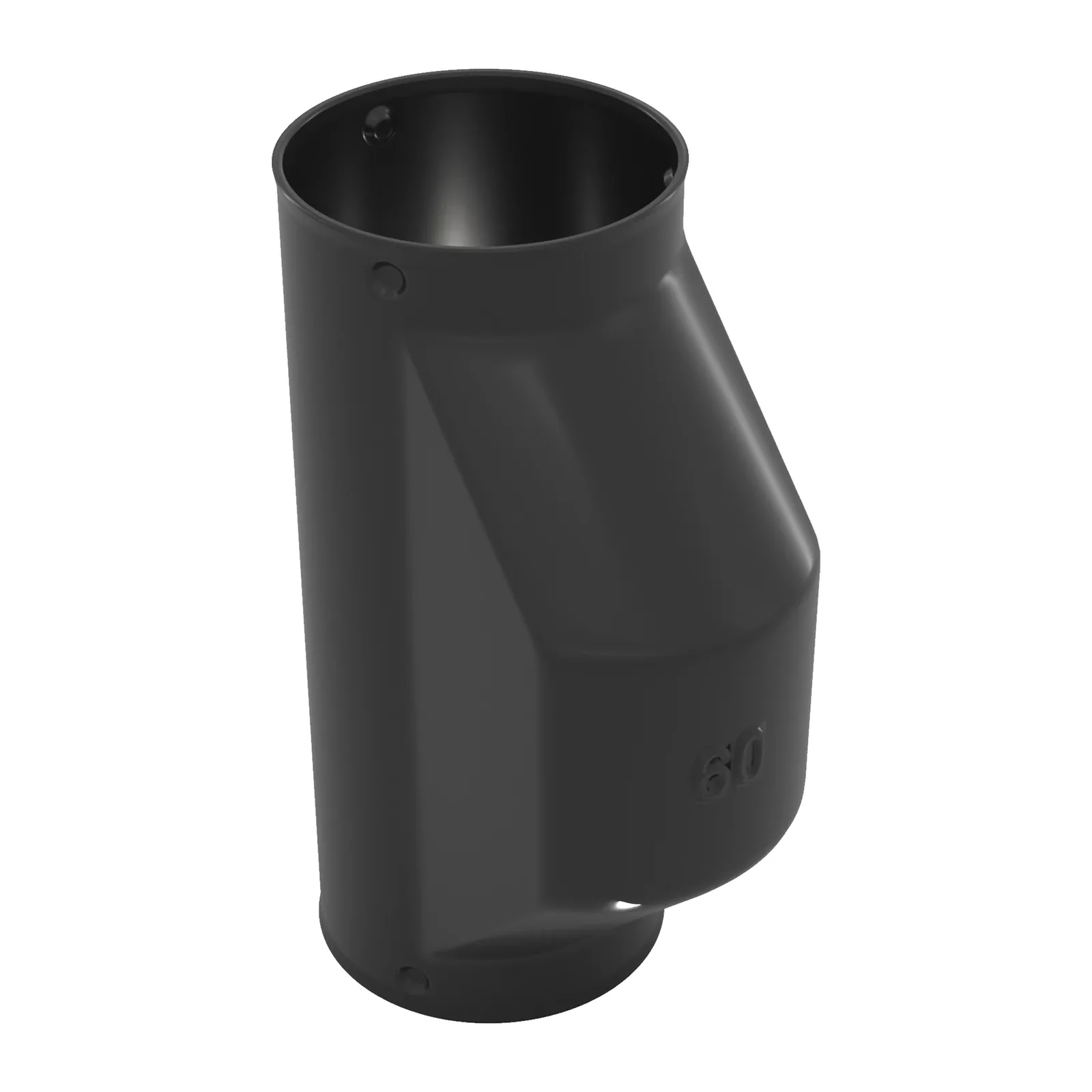
Use a 110mm to land drain / gutter adapter. Options cover 110mm to 50, 60, 80 or 100mm land drain, and 110mm to 68mm gutter downpipe. Choose the pair that matches both ends. Typical patio jobs are 110mm surface-water into 80mm or 100mm land drain, or a 68mm downpipe into that 110mm run. Full role guide: 110mm to land drain adapters.
Again: rain and groundwater only. If you are not sure which pipe you have opened, stop and check before you join anything.
A silt trap before a soakaway
New paving sheds jointing sand, cutting dust and grit. If that load runs straight into a soakaway, the first place water slows fills with silt and the drain stops working.
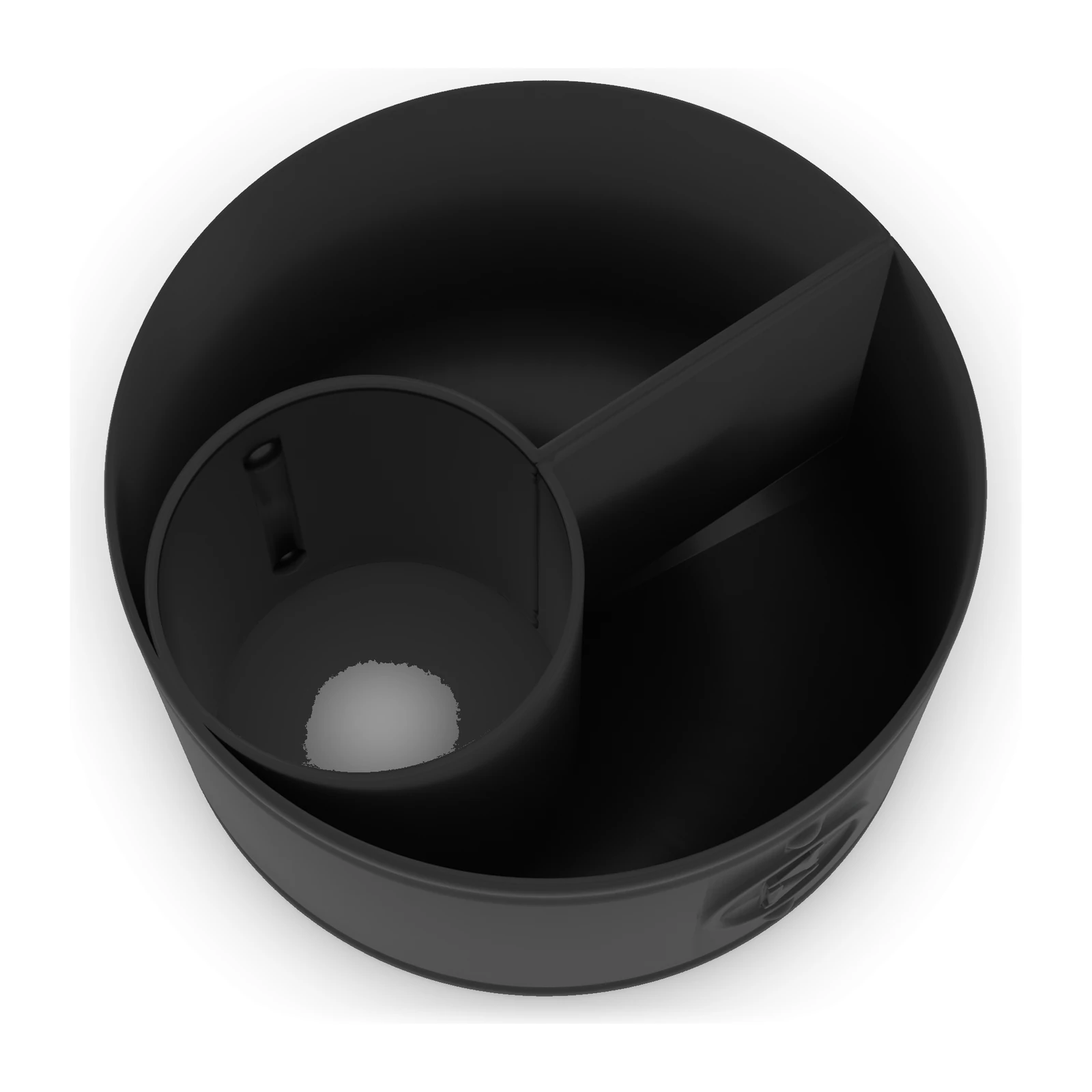
Put a silt trap in-line on the way to the soakaway, in 60, 80 or 100mm to match the pipe. Grit drops into a hopper where you can still dig to empty it. Why traps clog and where to place them: what a silt trap does for a land drain.
Talk to the landscaper before the slabs go down
The cheap time to do this is while the garden is already open. Agree four things before the first slab:
- The fall — away from the house, to a named edge
- The interceptor — land drain and/or channel along that edge, in gravel, with its own fall
- The outlet — soakaway, crate, or existing surface-water drain, with a silt trap on the way — not “it can soak into the lawn”
- The connections — any downpipe or 110mm surface-water pipe joined with an adapter, never into foul
If the patio is already laid and the lawn is a pond, you can still add an interceptor along the exposed edge. You cannot easily put a drain under finished paving. For the trench itself — depth, gravel, fleece, pipe — follow how to install a garden land drain.
Fittings, not pipe — and not foul
The Shape Shop sells land drain fittings made in the UK: adapters, couplings, Y junctions, silt traps and end caps. We do not sell the coiled land drain pipe, and we do not sell foul-drainage kits.
A large patio concentrates rain onto a smaller garden. Catch it at the edge, keep silt out of the soakaway, and join rainwater pipe to land drain with a fitting that matches both sides. Do that before the slabs go down if you can.
Frequently asked questions
- Why does a new patio make the remaining lawn wetter?
- Hard paving does not soak. Rain that used to spread across the whole garden now runs to the lowest patio edge and dumps onto whatever grass and borders are left. That leftover soil is taking the patio’s water as well as its own, so it stays wet for longer.
- Which way should patio paving fall?
- Away from the house, towards a planned low edge where you can intercept the water — not towards a door, a neighbour, or a random dip in the lawn. Without a catch drain at that edge, the fall only aims the flood.
- Can I connect a roof downpipe to land drain?
- Yes, for rainwater only. A 68mm gutter downpipe or a 110mm surface-water run can join corrugated land drain with a 110mm-to-land-drain or gutter adapter. Never put foul water from a toilet, sink or soil pipe into land drain.
- Why put a silt trap before a soakaway?
- New paving sheds jointing sand, grit and soil. That load settles where water slows down. A silt trap gives you a sump you can empty. Skip it and the soakaway often clogs in the first winter.
- Should the land drain go in before the patio is laid?
- Yes if you can. Digging the interceptor trench while the ground is open is cheap. Cutting a finished patio to fix a flooded lawn is slow, messy and easy to get wrong.
- Do you sell the pipe, and is this for foul drainage?
- No on both counts. Land drain and these adapters are for rain and groundwater — not foul. The Shape Shop sells fittings, not land drain pipe. Buy the coil from a builders’ merchant and check fit before ordering.
Fittings for this job
Pipe, gravel and membrane come from a merchant. These are the Shape Shop parts that match this article.