
How much land drain does a garden lawn need?
10 September 2026 · The Shape Shop
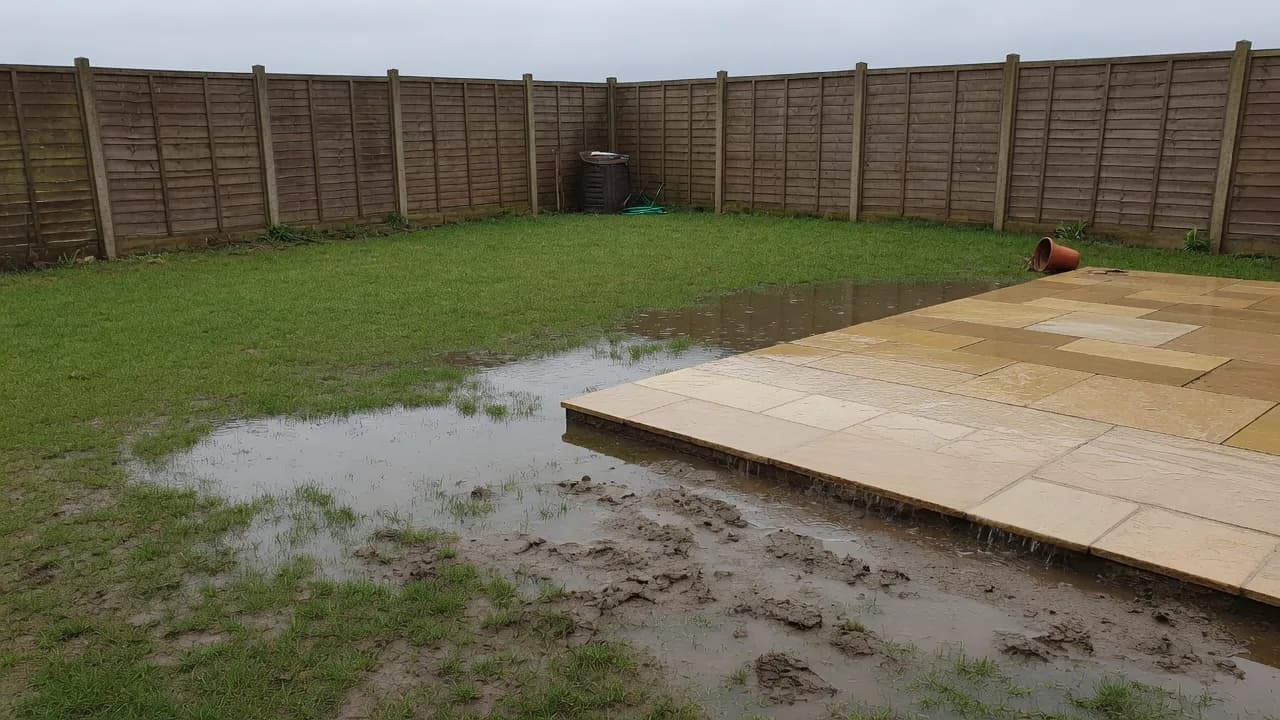
Most wet UK lawns need a layout, not a spare coil. Here is how to choose an interceptor or a herringbone, space laterals on clay or loam, and estimate metres of pipe and fittings.
Plan a main collector with a real outlet, then laterals about 5–8m apart on clay and about 8–12m apart on loam. That is the useful rule of thumb for a UK garden lawn that actually needs a land drain.
In pipe, that usually means one of two jobs:
- A single interceptor along the wet edge — often 10–20m, no herringbone, no Y junctions
- A full herringbone over the wet area — very roughly 0.2–0.5m of pipe per square metre of lawn you intend to drain, plus a short outfall
Those figures are typical DIY practice, not a regulation. Sports pitches are laid much tighter; a back lawn is not a football pitch. Diagnose the wetness first. Do not bury anything until you know where the water will go. We sell the fittings, not the pipe — coiled perforated land drain and gravel come from a builders’ merchant.
Diagnose the wetness before you buy pipe

A lawn that looks wet after rain is not automatically a land-drain job.
Compaction and thatch sit at the surface. The grass feels spongy, water beads after a shower, and a spade’s depth down the soil can still be only damp. Hollow-tine aeration, scarifying and a sandy top dressing often do more here than a grid of pipe.
True waterlogging lasts. The ground stays squelchy for days, footprints fill, and moss lingers. Dig a test hole of about 300–400mm after wet weather: if it stands with water, or the sides weep, the soil at drain depth cannot get rid of water fast enough. That is when a land drain earns its trench.
Runoff from hard surfaces is a third pattern. The wet band is next to a patio, path or downpipe, not in the middle of the grass. Intercept there — a herringbone under the whole lawn will not fix a downpipe. See garden drainage when landscaping patios.
If clay lawn and a new patio are both true, drain the source first, then decide whether the rest of the grass still needs laterals.
Interceptor drain or herringbone?
You do not have to drain every square metre.
A single interceptor is one trench on a fall, along the lowest edge of the wet area, along the patio, or across the line where water enters the lawn. Use it when the problem is a band. Pipe quantity is the length of that edge plus a few metres to the outlet. Fittings stay simple: couplings where coil lengths meet, a solid end cap on each buried high end, and a silt trap near the outfall.
A herringbone is a main collector with laterals joining it at a Y, branches pointing upstream. Use it when the whole lawn (or a large rectangle of it) stays wet. Each lateral needs a Y junction on the main.
A halfway house is often enough: two interceptors, or a main with one or two laterals into a hollow. Add pipe where the water sits, not where a diagram looks neat.
How far apart should laterals be?
Closer on clay, wider on loam. Typical UK garden DIY spacing — typical, not a regulation:
- Heavy clay: laterals about 5–8m apart
- Loam or clay-loam that still drains a little: about 8–12m
- Sandy or free-draining soil: ask whether you need a land drain at all
Laterals commonly sit around 400–600mm to the invert, in a gravel-filled trench, on a continuous fall (a 1:100 fall is a working target — 10mm per metre). If you cannot get a fall, you do not have a drain. Do not copy a tight sports-pitch grid onto a family lawn “to be safe”.
Worked examples: metres of pipe and fittings
Treat these as order-of-magnitude ranges. Merchants commonly sell 25m or 50m coils — we do not sell the pipe.
Count fittings like this:
- Y junctions: one per lateral that joins the main
- End caps: one per upstream dead end (packs of two)
- Couplings: only where you join coil or make a repair
- Silt trap: one on most garden outlets
Small lawn, about 50m²
Interceptor: about 8–15m of pipe, no Y junctions, 0–2 couplings, 1–2 end caps, one silt trap.
Herringbone on clay: about 15–30m of pipe, 1–3 Y junctions, 1–3 couplings, 2–4 end caps, one silt trap. This is the size people most often over-buy for.
Typical suburban lawn, about 150m²
Interceptor along one long edge: about 15–25m of pipe, 0 Y junctions, 1–3 couplings, 1–2 end caps, one silt trap.
Herringbone on loam at about 10m spacing: about 25–50m of pipe, 1–3 Y junctions.
Herringbone on clay at about 5–8m spacing: about 40–70m of pipe, 3–6 Y junctions, 3–8 couplings, 4–8 end caps, still usually one silt trap.
If only half the lawn is wet, drain that half.
Larger garden, around 300m²
Interceptor on the low boundary: about 20–35m of pipe.
Herringbone on loam: about 50–80m of pipe, 3–6 Y junctions.
Herringbone on clay: about 70–120m of pipe, 6–10 Y junctions, 6–12 couplings, 7–12 end caps, one or two silt traps. Add 5–15m for the outfall if the soakaway sits away from the lawn.
Beyond this, get the layout drawn. Garden rules of thumb stop being honest at field scale.
60mm, 80mm or 100mm for a lawn
Metres of trench do more for a wet lawn than a jump in pipe diameter. Short version for lawns (full detail: land drain sizes):
- 60mm — short laterals or a tiny lawn
- 80mm — the usual UK garden choice for laterals and many mains on 50–150m² plots
- 100mm — a collector that several laterals feed, or extra water from paving and downpipes
Pipe sizes differ by brand. Measure your coil and check fit before ordering. Shape Shop will release OD fittings soon for wider compatibility — no date or SKUs yet. Match fittings to the coil you actually bought.
The outlet is part of the quantity
A land drain without somewhere to empty only moves water around. Every layout above assumes an outfall: a soakaway, a ditch or watercourse where allowed, or an existing 110mm surface-water drain — not the foul sewer.
Put the silt trap upstream of that point. Cap buried high ends with solid or grid caps. If the outlet end is exposed and water must leave the pipe, see anti-return end caps for land drain outlets — that fitting is for exposed outlets, not buried dead ends, and it is not a check valve.
If you cannot identify an outlet, stop. More laterals will not create one.
What to order — fittings, not pipe
From the examples, the fittings list is small next to the pipe: Y junctions equal to the laterals, end caps for every blanked high end, a few couplings, and one silt trap unless the run is long.
We manufacture those parts. We do not sell land drain pipe, gravel, or geotextile. Buy the coil once a sketch exists — main, laterals, outlet, fall — so you avoid a single short trench that does nothing, or a full coil buried at random.
When the quantities feel right, how to install a garden land drain covers the trench, the gravel and the joints. Joining coil to coil: how to join land drain pipe.
Frequently asked questions
- How many metres of land drain does a lawn need?
- There is no single figure. A wet strip often needs one interceptor of about 10–20m. A full herringbone on clay is often roughly 0.2–0.5m of pipe per square metre of lawn — about 15–30m on 50m², 40–70m on 150m², and 70–120m on a larger 300m² plot. Loam can take wider gaps, so less pipe. Those are planning ranges, not a regulation.
- Is one drain around the edge of the lawn enough?
- It can be, if the wetness is a band — water coming off a patio, a slope, or a neighbour’s ground. That is an interceptor. If the whole lawn stays squelchy for days after rain, an edge drain usually leaves the middle wet. Then you need laterals, typically as a herringbone into a main collector.
- What size pipe should I use — 60, 80 or 100mm?
- For most UK garden lawns, 80mm is the usual size for laterals and for a modest main. Use 60mm only on a short, small run. Use 100mm for a collector that several laterals feed, or where a patio or downpipe adds extra water. Pipe sizes differ by brand — check fit before ordering.
- Can I connect a land drain to the foul sewer?
- No. Land drain is groundwater and surface water. It must not go into the foul drain. Typical outlets are a soakaway, a ditch or watercourse where allowed, or an existing 110mm surface-water drain.
- How many Y junctions, couplings and end caps should I order?
- One Y junction per lateral that joins the main. One end cap per upstream dead end. Couplings only where you join coil lengths or make a repair. Add one silt trap near the outlet on most garden jobs.
- Do I need more land drain after laying a patio?
- Often yes, but not as a second herringbone under the whole lawn. Intercept at the patio edge and give that water a proper outlet. See our guide to drainage when landscaping a garden with a large patio.
Fittings for this job
Pipe, gravel and membrane come from a merchant. These are the Shape Shop parts that match this article.
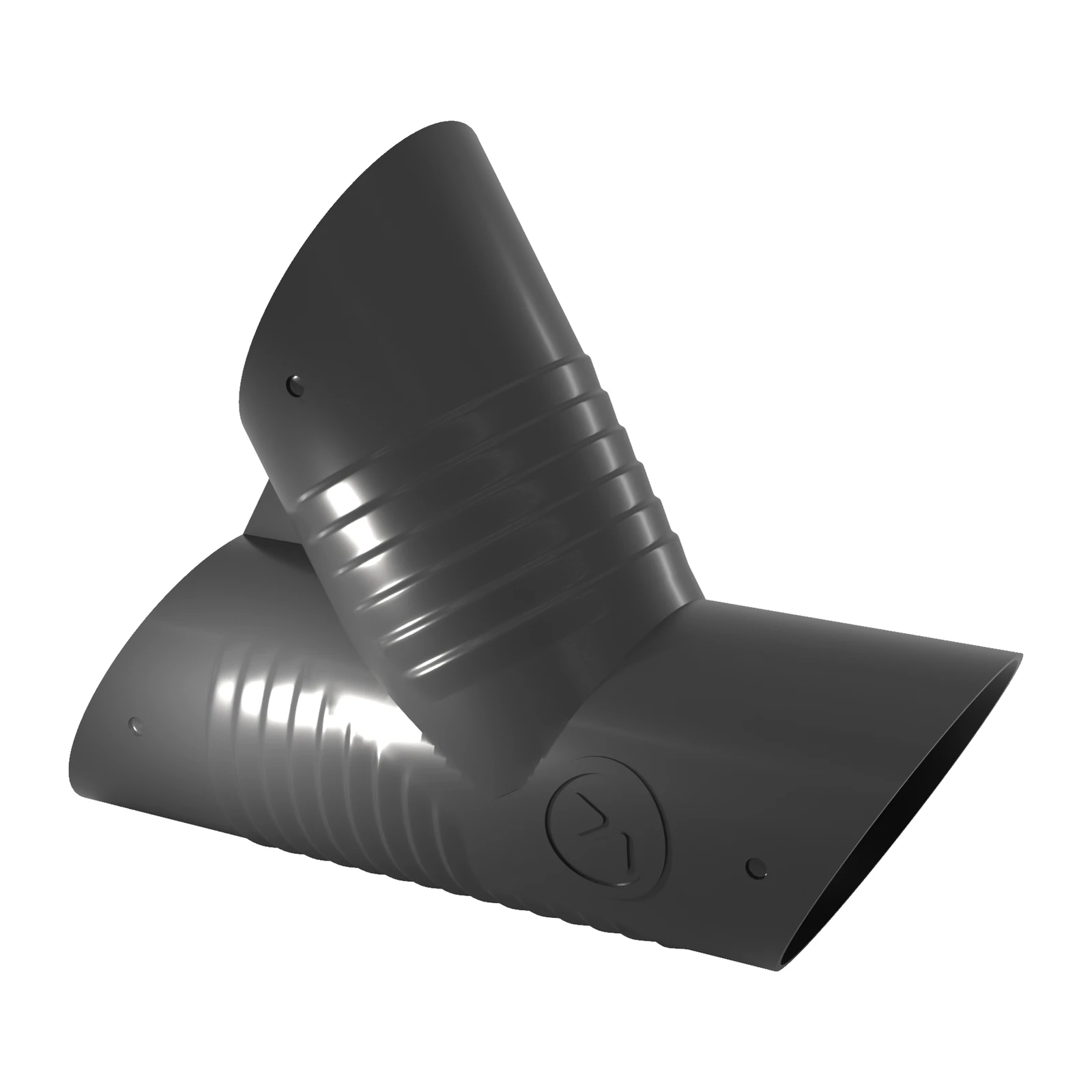
Y Junction 60, 80 and 100mm for Land Drain Pipe, UK Made
- 60 · 80 · 100mm
From £7.95
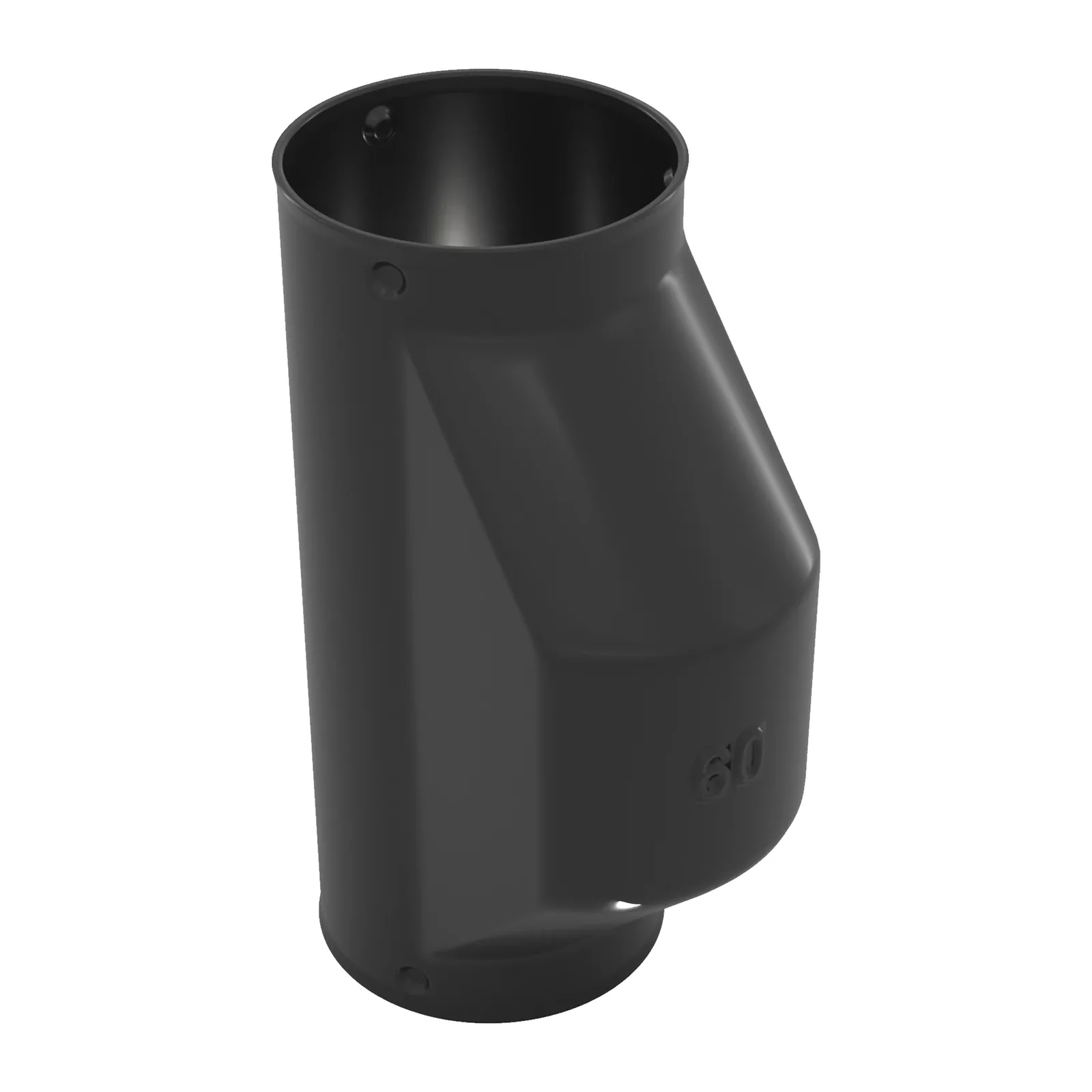
Silt Trap 60, 80 and 100mm for Land Drain Pipe, In-Line, UK Made
- 60 · 80 · 100mm
From £8.95
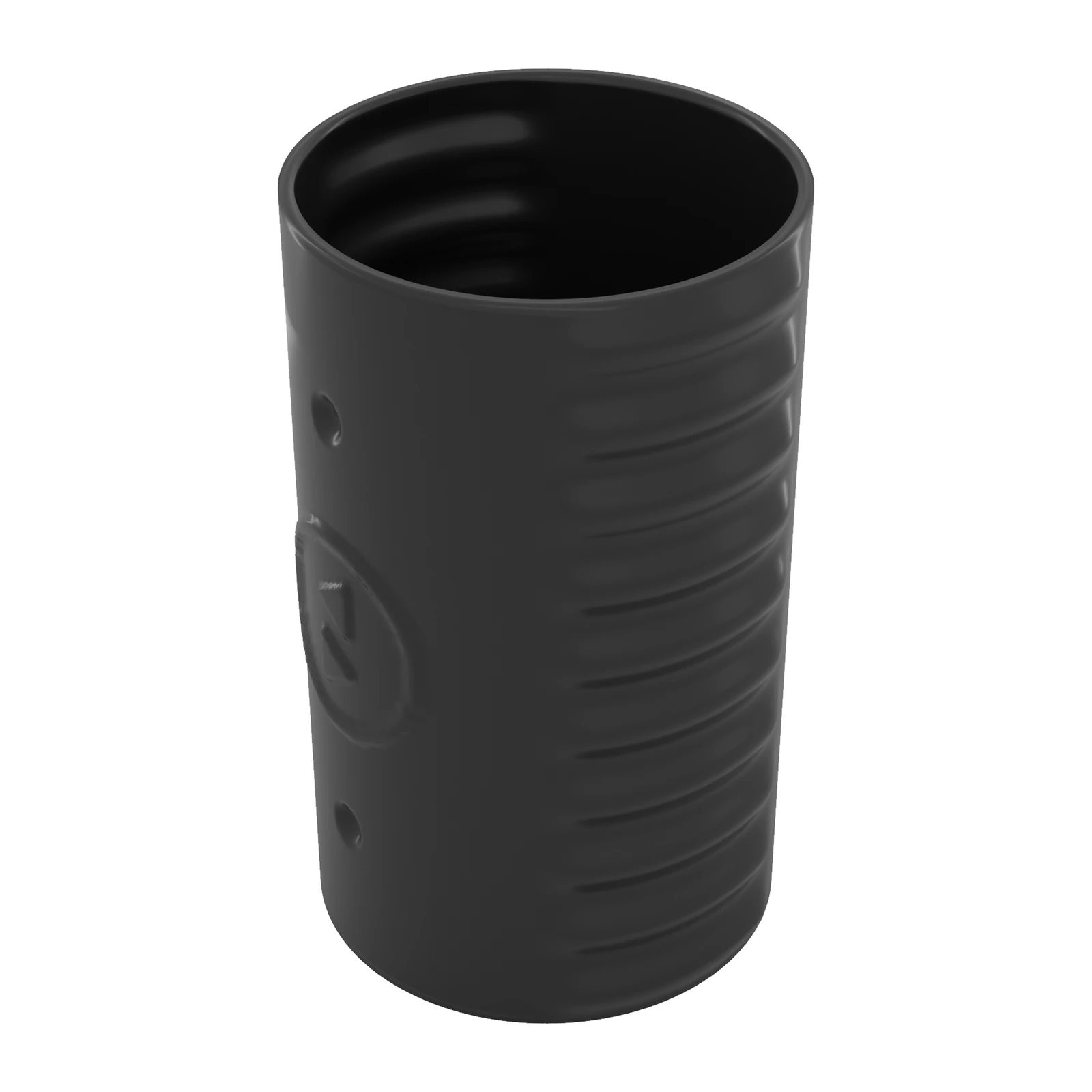
Coupling 60, 80 and 100mm for Land Drain Pipe, UK Made
- 50 · 60 · 80 · 100mm
From £5.95
Solid Stopper Plug 50, 60, 80 and 100mm for Land Drain Pipe, UK Made
- 50 · 60 · 80 · 100mm
- Inside-pipe fit
From £2.80